
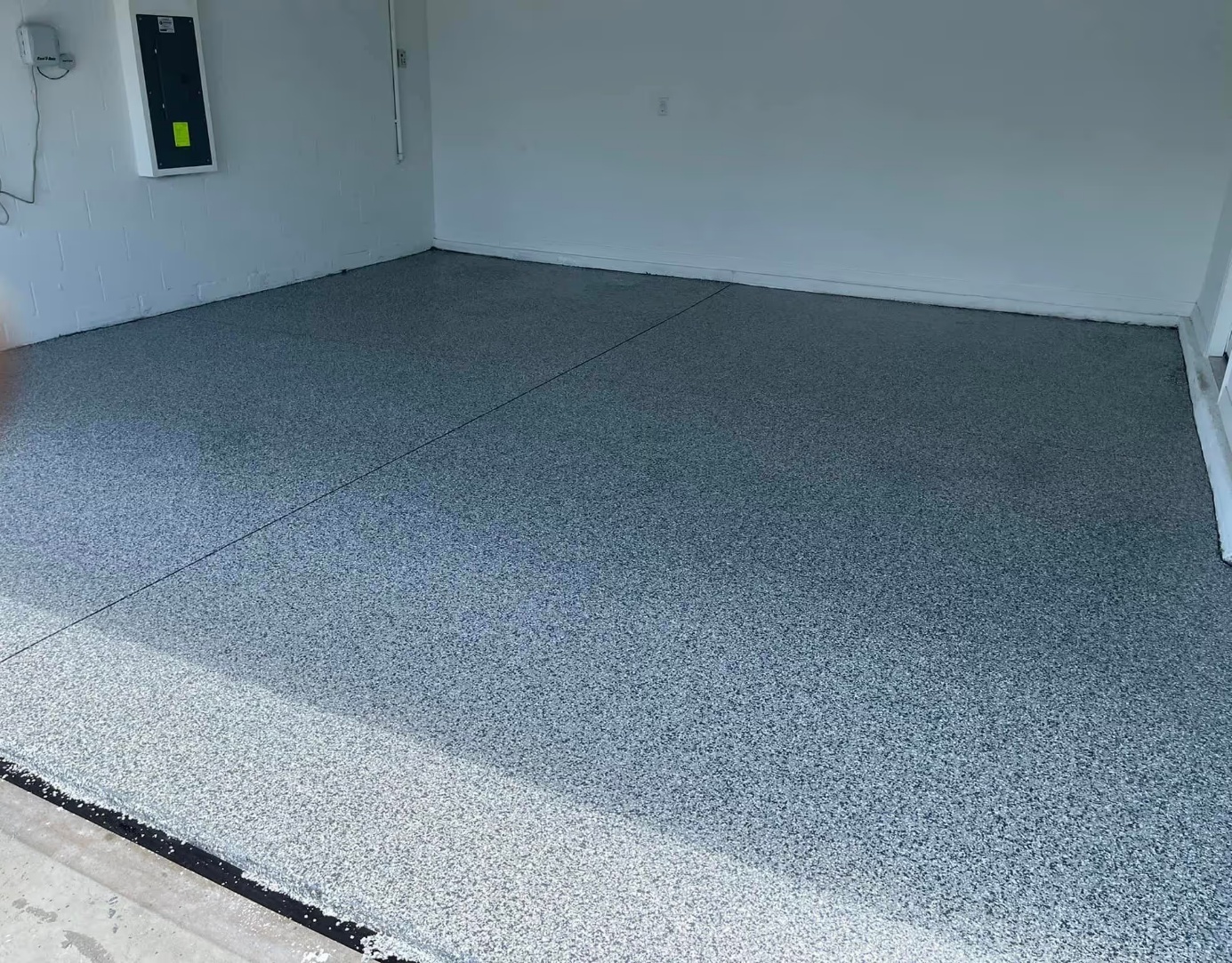

A homeowner considering garage epoxy flooring can receive quotes that look similar on the surface but include very different levels of preparation, materials, and installation work. The lowest number is not automatically the best value. A useful comparison starts by understanding what is included beneath the decorative finish and how the proposed system is expected to handle vehicles, hot tires, moisture, spills, and daily wear.
A garage coating should be treated as a complete flooring system. Surface preparation, crack repair, primer, base coat, decorative broadcast, topcoat, curing, and maintenance guidance all influence the finished result.
Compare Preparation Before Comparing Color
Two proposals may both promise a decorative flake floor, yet one may include mechanical grinding while another relies on lighter surface cleaning. That difference can be more important than the color blend.
When evaluating an epoxy flooring contractor, ask exactly how the existing concrete will be prepared. Grinding can remove weak material, old coatings, contaminants, and create a suitable surface profile. Edges and corners should be addressed as well rather than receiving less preparation than the open slab.
Ask How Cracks and Damage Are Handled
Garage slabs often contain shrinkage cracks, pits, spalled areas, or previous repairs. A quote should explain whether these defects are included in the preparation work or priced separately.
Not every crack should automatically receive the same repair material. Stable cracks, moving joints, and damaged concrete can require different treatment. Repair work may also remain faintly visible depending on the final system, so realistic expectations matter.
A detailed scope reduces the chance of discovering additional charges only after grinding exposes the slab.
Understand Every Layer in the System
The phrase “epoxy floor” can describe several different systems. A garage installation may use a primer, high-build epoxy base coat, decorative flakes, and a protective polyaspartic or other compatible topcoat.
Ask what each layer is designed to do and which products are proposed. The topcoat deserves particular attention because it faces tire traffic, abrasion, chemicals, cleaning, and sunlight near the garage entrance.
Material names alone do not guarantee performance. Product compatibility and correct installation matter just as much.
Look at Broadcast and Texture Details
Decorative flakes can be lightly scattered or broadcast more heavily across the floor. The amount changes both appearance and texture.
A fuller broadcast can create a more consistent decorative look and help disguise minor visual variation. Texture can also be adjusted through the broadcast and final coat.
More grip is useful in garages that become wet, but an excessively rough surface can trap dirt and take longer to clean. The proposal should reflect how the household actually uses the garage.
Check What the Quote Says About Moisture
Concrete can transmit moisture even when it looks dry. If the slab history, location, or visible conditions suggest a concern, ask whether moisture testing or a compatible mitigation layer may be appropriate.
A moisture-control product should not be treated as a universal add-on. Active leaks, drainage issues, or other sources of water still need to be addressed separately.
Clear discussion before installation is better than discovering adhesion problems later.
Compare Timelines Carefully
A fast installation can be convenient, but the schedule should still include enough time for preparation, repairs, coating, and curing.
Ask when foot traffic can resume, when shelving or equipment can return, and when vehicles can safely park on the floor. These times may differ.
Temperature, product chemistry, and site conditions can also affect curing, so a project-specific timeline is more useful than a generic “one-day floor” promise.
Review Warranty and Maintenance Terms
A warranty should be read rather than simply counted in years. Ask what is covered, what is excluded, and whether concrete movement, moisture, misuse, or chemical exposure affects coverage.
Maintenance guidance matters too. The installer should explain suitable cleaners, how to handle spills, and whether periodic inspection or recoating may eventually be recommended.
A clear aftercare plan is part of professional installation.
Conclusion
Comparing garage flooring proposals becomes easier when price is only one part of the decision. Preparation, repairs, coating layers, moisture planning, texture, curing, warranty terms, and maintenance all reveal what the quoted system actually includes.
Homeowners who ask these questions can compare proposals on substance instead of marketing language. The strongest choice is usually the system whose preparation and materials are clearly matched to the existing slab and the way the garage will be used every day.