

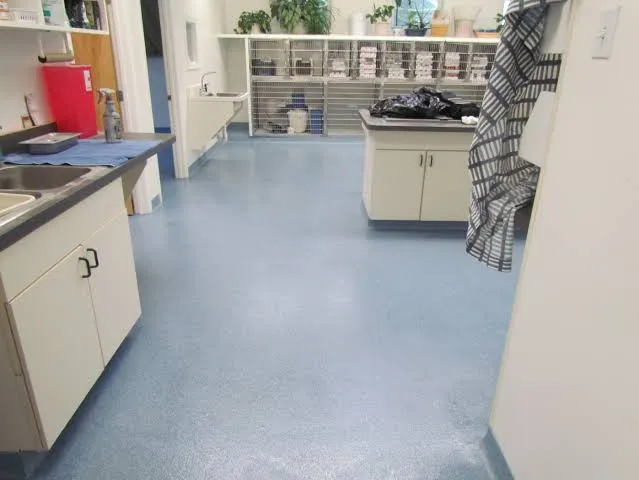
Laundry and linen rooms are rarely the first spaces considered during a veterinary flooring project, yet they handle moisture, detergents, rolling carts, animal bedding, and repeated cleaning. Towels, blankets, and reusable pads may arrive soiled and wet, while machines introduce vibration, heat, and occasional leaks. Flooring in this area should therefore support sanitation and equipment access without being treated like an ordinary back-room surface.
Soiled Linen Arrives With Moisture
Laundry rooms often receive bedding directly from kennels, recovery areas, treatment rooms, or bathing stations. These materials may carry water, hair, organic residue, and cleaning products into the space.
Managers should observe where hampers are unloaded and whether the same floor sections remain damp. Worn coatings, cracks, or porous concrete can make these areas harder to maintain.
Facilities considering Veterinary Epoxy Flooring Nj should therefore include laundry rooms in the broader flooring plan rather than limiting attention to exam rooms and kennels.
Washers Create Localized Wet Zones
Commercial washing machines concentrate plumbing, water, vibration, and service connections in one part of the room. Small leaks from hoses, valves, drains, or maintenance work can repeatedly affect surrounding concrete.
The floor should be inspected around machine bases and utility penetrations before resurfacing. Low spots can allow water to remain where cleaning access is limited.
A resinous surface can create a continuous finish, but significant drainage or plumbing problems still need separate correction.
Detergents Add Chemical Exposure
Laundry operations may use detergents, disinfecting agents, stain removers, or other cleaning products. Their frequency and concentration should be discussed during flooring selection.
A system suitable for a dry corridor may not be ideal around washing equipment exposed to repeated chemical cleaning. Facility teams should document normal laundry products and spill-response procedures so the flooring specification reflects realistic conditions.
Rolling Hampers Create Repetitive Traffic
Linen carts and wheeled hampers may travel between laundry rooms, kennels, surgery, recovery, and storage throughout the day. Their small casters can make rough thresholds, chipped repairs, and damaged joints more noticeable.
Doorways deserve particular attention because carts repeatedly cross the same narrow transition. Smooth thresholds can reduce jolting while making the route easier to clean.
Staff can identify locations where carts catch or vibrate before renovation begins.
Machine Vibration Should Not Be Ignored
Washers and dryers can transmit vibration through their bases, especially during high-speed cycles. Existing cracks or weak patches near equipment may become more visible over time.
An Epoxy Floor Installer In Green Brook should assess the substrate around machine pads, anchors, and utilities rather than simply coating over defects. Mechanical preparation can expose old repairs or weak material that needs attention before the new system is applied.
Where equipment is being replaced, temporary open access creates a useful opportunity for more complete preparation.
Texture Needs a Practical Balance
Laundry areas can become wet, so traction is useful. However, excessive texture may trap hair, lint, detergent residue, and debris, increasing cleaning effort.
The surface profile should consider staff footwear, wheeled carts, spill frequency, and cleaning equipment. Wet machine zones may justify more texture than comparatively dry linen-storage areas.
A zone-based approach can support traction without making the entire room unnecessarily rough.
Lint and Hair Affect Housekeeping
Animal-care laundry rooms often collect more hair and lint than ordinary commercial laundry spaces. These materials can settle around machine bases, drains, wall edges, and corners.
A seamless floor with well-detailed perimeters can make routine sweeping and washing more manageable. Cove bases may also be useful where smoother floor-to-wall transitions are desired.
Regular housekeeping remains important so drains and service areas stay accessible.
Plan Work Around Laundry Operations
Laundry support can be essential to daily animal-care operations, so shutting the room down may affect kennels, treatment areas, and recovery spaces.
Managers should coordinate equipment relocation, preparation, installation, curing, and reopening with the facility’s linen schedule. Temporary alternate laundry arrangements may be necessary during the project.
The floor should return to full use only after it is ready for carts and heavy machines.
Conclusion
Laundry and linen rooms create a distinctive flooring environment through moisture, detergents, vibration, animal hair, rolling carts, and concentrated equipment loads. Although these spaces sit behind the scenes, flooring problems can interfere with sanitation and support operations across an animal-care facility.
A stronger plan includes laundry areas in the same careful assessment given to clinical and kennel spaces. Proper substrate preparation, smooth transitions, suitable chemical resistance, balanced texture, detailed machine zones, and coordinated scheduling can create a floor that is easier to clean and better suited to repetitive veterinary laundry demands.