
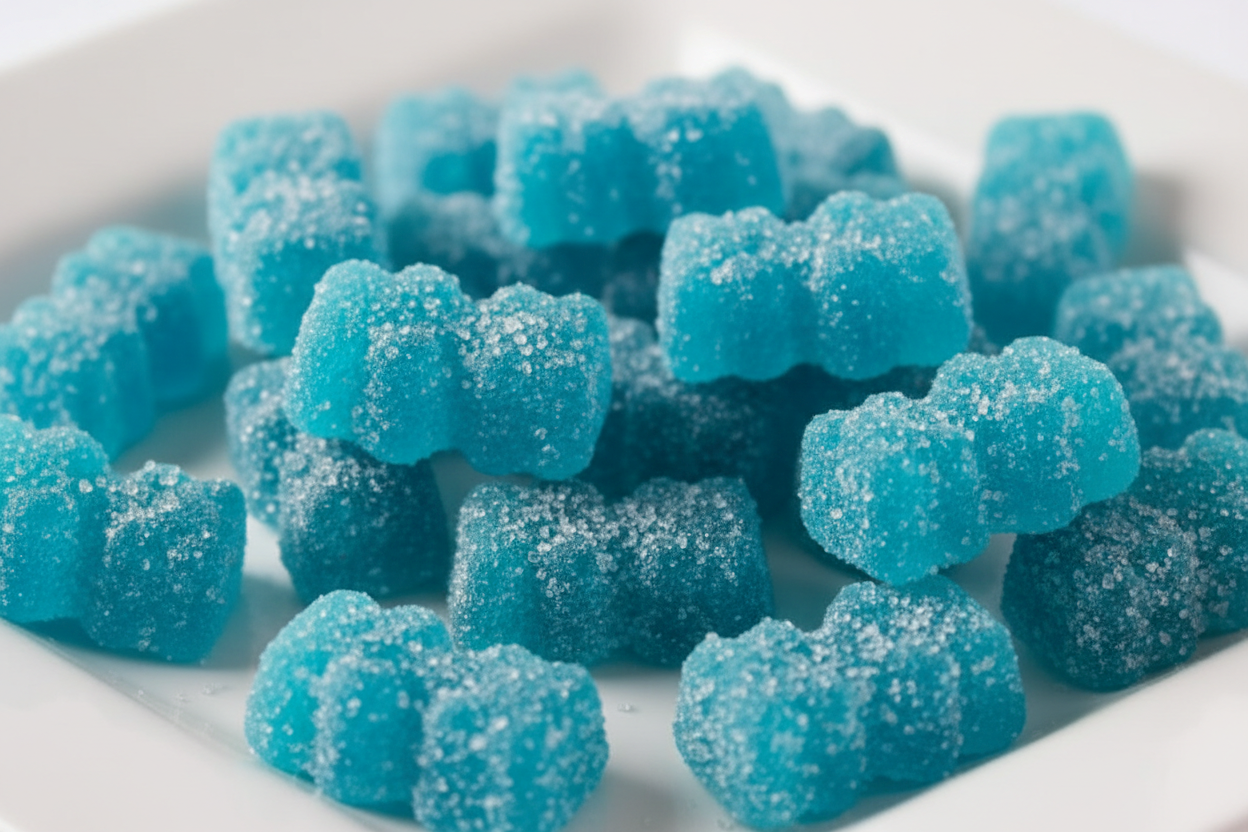

Blue food gets noticed. A bright drink, piece of confectionery or frozen treat can stand out immediately beside familiar reds and yellows. Creating that appearance with naturally derived ingredients, however, is not simply a matter of adding blue until the shade looks right.
The food surrounding the color has a say in the final result. Acidity, the existing color of the base, processing and storage conditions can all influence what developers see. That makes blue an interesting formulation project rather than a last-minute decoration.
Start With the Product’s Existing Color
Imagine adding blue to two mixtures. One is almost clear. The other already has a noticeable yellow tint.
It should be obvious before testing what the findings might be. The background color of a food can change how an added shade is perceived.
Prepare an uncolored control before beginning trials. Keep it beside the coloured versions so the team can see exactly how much of the finished appearance comes from the color ingredient and how much comes from the recipe itself.
Decide Which Blue You Mean
“Make it blue” sounds specific until several blue samples are placed beside one another.
One may look bright and playful. Another leans towards turquoise, while a third appears deeper and more muted. Agreeing on a reference shade early prevents different people from chasing different targets.
When evaluating gardenia blue, developers should also consider whether the target remains realistic within the particular food system. The best-looking sample in a simple test solution may not produce the same impression inside the finished recipe.
Acidity Cannot Be Ignored
pH is one of the first formulation details worth checking when working with naturally derived colors.
Some natural pigments respond to changes in acidity, and that response can influence the visible shade. This becomes particularly relevant in beverages, confectionery and other products where acidic ingredients form an important part of the recipe.
Test under the product’s real pH conditions rather than adjusting a simple sample until it looks attractive. If the formulation later changes substantially, repeat the color evaluation instead of assuming the original result will remain unchanged.
Replacement Is Not Always a Straight Swap
Manufacturers exploring Spirulina Extract Color as a natural blue may be working with a product that already has an established appearance.
That creates an additional challenge. Consumers may recognize the existing color, so reformulation is not only about producing something blue. The development team may be trying to get reasonably close to a familiar visual identity while working with a different coloring system.
A one-for-one substitution should not be assumed. Start with controlled trials and adjust according to the performance of the alternative in the actual recipe.
Watch What Processing Does
The color should be evaluated after it has experienced the same process as the food.
Mixing order, temperature and other manufacturing conditions can influence formulation performance. Record when the color is added and how the batch is processed rather than relying only on dosage information.
If two trials use the same quantity but produce different results, those processing notes may explain what happened.
They become even more valuable when the formulation moves from laboratory equipment to a larger production line.
Packaging Is Part of the Trial
A development sample kept safely in a laboratory does not necessarily experience the conditions faced by a commercial product.
Light exposure and storage temperature can become relevant during shelf-life testing. Evaluate samples in packaging that reasonably represents the final format, and check them at appropriate intervals.
The first day matters, but so does the day a customer actually picks up the product.
Let Scale-Up Prove the Formula
Moving from a small batch to production introduces larger mixers, longer ingredient additions and different processing times.
Do not assume that multiplying the laboratory formula will automatically recreate the same visual result. Treat the pilot or first production batch as another checkpoint.
Compare it with the approved reference before making unnecessary adjustments. Sometimes the difference is smaller than it initially appears under different lighting.
Conclusion
Natural blue development rewards patience because several small factors can pull the finished shade in different directions. The base color, acidity, processing and package all contribute something to what the eye eventually sees.
The most useful question is not whether a blue ingredient looks impressive by itself. It is whether it continues to deliver the intended appearance after becoming part of the real food. Development teams working through that question can explore application-specific color solutions at foodrgb.com and validate them under their own production conditions.